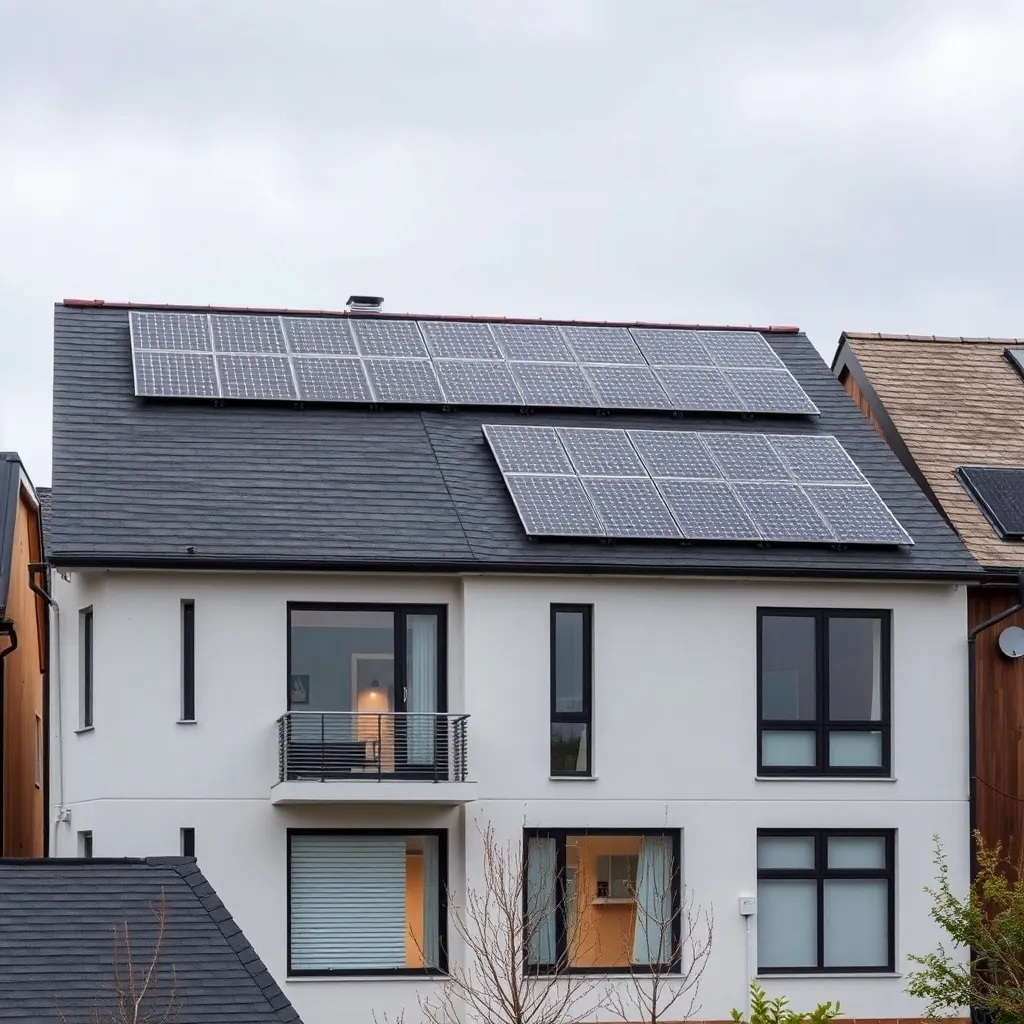
Modern residential architecture in Halifax with solar panels

Resource Stewardship

Investing in durable infrastructure for Nova Scotia.

Home
Ownership

Transitioning from a renter to an owner in Halifax is more than a financial shift; it is a commitment to the long-term preservation of local resources. Ownership grants the authority to implement energy-efficient upgrades that reduce the collective ecological footprint while building multi-generational equity.

Explore Financial Projections

Strategic Parameters

Capital Expenditure

Home maintenance is an act of environmental preservation. Allocating 1% of property value annually for upgrades like heat pumps and high-efficiency insulation ensures the structural integrity and resource efficiency of the dwelling.

Sustainability Impact

Tax Regulations

Halifax Regional Municipality (HRM) property taxes fund the very infrastructure that sustains our community. Understanding the assessment process is vital for calculating the true cost of local resource upkeep.

Policy Documentation

The Ethical Dimension of Property Acquisition

Acquiring property in the Halifax market requires a rigorous analytical approach. Unlike renting, where responsibility for the building's envelope and mechanical systems lies with a third party, ownership places the burden of stewardship directly on the individual. This responsibility extends beyond financial solvency; it encompasses the management of energy, water, and land. By choosing to own, you are opting to manage a portion of the Earth's surface, ensuring its efficient use for future generations.

Our data indicates that homes equipped with sustainable technologies—such as solar arrays or advanced rainwater harvesting systems—not only retain higher value but also contribute significantly to the stability of the local power grid. This synergy between financial gain and resource responsibility is the cornerstone of a resilient housing market. For more on this, consult our Halifax Housing Market Data 2024.

The decision to transition from the Sustainable Renting Guide model to full ownership should be predicated on a five-to-ten-year horizon. Short-term ownership often leads to neglected maintenance and inefficient resource allocation, whereas long-term commitment allows for the amortization of high-efficiency capital improvements.
4.2% Avg. Annual Equity Growth
15% Energy Cost Reduction
30yr Standard Asset Lifecycle
1.1% Effective Tax Rate (HRM)

Annual Maintenance Responsibility Checklist

  • Envelope Inspection (Bi-Annual)

    Checking seals, caulking, and roof integrity to prevent thermal loss and water ingress. Preventing structural decay is the most cost-effective form of resource conservation.

  • asset-icon

    HVAC Optimization

    Annual servicing of heat pumps and furnace filters. An unmaintained system can consume up to 25% more energy, increasing both costs and carbon output.

  • Landscape & Permeability

    Ensuring proper drainage and maintaining permeable surfaces to reduce storm-water runoff into the Halifax harbor system.

Commit to the Future

Understanding the financial and ecological implications of home ownership is the first step toward a sustainable Nova Scotia. Download our full dataset for a comprehensive breakdown.